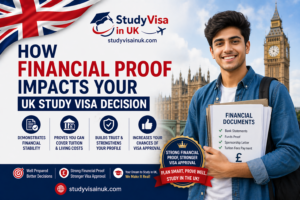
One of the most common—and most important—questions students ask when applying for a UK study visa is:
“How much bank balance do I need?”
In 2026, financial requirements remain one of the most critical factors in the UK student visa decision. Even if you have a strong academic profile, your visa can still be refused if your financial proof is weak or unclear.
In this blog, we’ll break down exactly how much bank balance is required for a UK study visa in 2026, how to calculate it, common mistakes to avoid, and expert tips to strengthen your financial profile.
Why Bank Balance Matters for UK Study Visa
The UK government requires proof that you can:
- Pay your tuition fees
- Cover your living expenses
- Support yourself without financial stress
This ensures that you are a genuine student and not dependent on illegal work.
Visa officers carefully evaluate your financial documents to determine:
- Stability
- Transparency
- Credibility
Basic Financial Requirement Formula (2026)
To calculate your required bank balance, you need to consider two main components:
1. Outstanding Tuition Fee
This is the amount mentioned in your CAS (Confirmation of Acceptance for Studies).
If you have already paid part of your tuition, the remaining balance must be shown.
2. Living Expenses
The UK government sets a fixed amount for living costs.
For Students Outside London:
- £1,023 per month
- Up to 9 months
Total: £9,207
For Students in London:
- £1,334 per month
- Up to 9 months
Total: £12,006
Total Bank Balance Requirement
Example 1 (Outside London):
- Tuition fee remaining: £10,000
- Living cost: £9,207
Total Required: £19,207
Example 2 (London):
- Tuition fee remaining: £12,000
- Living cost: £12,006
Total Required: £24,006
This is the minimum amount you must show in your bank account.
Important Rule: 28-Day Maintenance Requirement
One of the most crucial rules is the 28-day rule.
What It Means:
- Your required funds must be in your bank account
- Maintained continuously for at least 28 days
- Ending date should be close to your visa application
Common Mistake:
Depositing money just before applying
This can lead to visa refusal.
Acceptable Financial Documents
To prove your bank balance, you can submit:
- Bank statements
- Bank certificates
- Official letters from financial institutions
Documents must be:
- Genuine
- Verifiable
- Clearly formatted
Who Can Sponsor Your Funds?
Your financial proof can come from:
1. Yourself
2. Parents
3. Legal guardian
If using a sponsor, you must show:
- Relationship proof
- Sponsor’s income source
- Consent letter
Clear documentation strengthens your application.
Common Financial Mistakes to Avoid
Many visa refusals happen بسبب financial errors.
1. Sudden Large Deposits
- Raises suspicion
- Suggests borrowed funds
Always maintain a stable balance.
2. Incomplete Documentation
- Missing statements
- Unclear records
Provide complete and organized documents.
3. Using Fake Documents
- Leads to immediate rejection
- Possible future ban
Never risk your future—be honest.
4. Incorrect Amount Calculation
- Showing less than required funds
Always double-check your calculations.
How Visa Officers Evaluate Your Bank Balance
Visa officers don’t just check the amount—they analyze:
- Consistency of funds
- Source of income
- Financial history
- Sponsor credibility
They are looking for a complete financial story.
Tips to Strengthen Your Financial Profile
1. Start Early
- Prepare funds months in advance
- Avoid last-minute stress
2. Maintain Consistency
- Keep a stable balance
- Avoid frequent large transactions
3. Show Clear Income Source
- Salary slips
- Business documents
- Tax records
4. Organize Your Documents
- Clear formatting
- Proper labeling
- Easy verification
5. Be Transparent
- Explain any unusual transactions
Transparency builds trust.
Role of University in Financial Requirement
Even if you apply to universities like University of Sunderland or Solent University:
Your financial proof must still meet UK visa requirements.
University admission does NOT guarantee visa approval.
Impact of Financial Proof on Interview
If you are called for an interview, expect questions like:
- Who is funding your studies?
- What does your sponsor do?
- How will you manage expenses?
Your answers must match your documents.
Real-Life Scenario
Weak Financial Profile:
- Sudden deposit
- No income proof
- Inconsistent statements
Result: Visa refusal
Strong Financial Profile:
- Stable balance
- Clear documentation
- Verified income
Result: Visa approval
Currency Conversion Tip
If your funds are in Pakistani Rupees:
Convert to GBP and ensure it meets the required amount.
Important:
- Keep extra funds as a buffer
- Avoid exact minimum balance
Why Financial Requirements Matter More in 2026
Due to increasing applications, UK visa authorities are:
- Conducting stricter checks
- Verifying documents more carefully
- Focusing on genuine students
Financial proof is now more important than ever.
Key Takeaways
- You must show tuition fee + living expenses
- Funds must be maintained for 28 days
- Documentation must be clear and genuine
- Financial stability increases approval chances
Final Thoughts
Your bank balance is more than just a number—it’s a reflection of your preparation and credibility.
A strong financial profile shows:
- Responsibility
- Planning
- Genuine intent
It plays a major role in your visa approval.
Conclusion
If you’re planning to apply for a UK study visa in 2026, make financial preparation your top priority.
Calculate your required funds correctly
Maintain your balance consistently
Avoid common mistakes
By doing this, you significantly increase your chances of visa approval and move one step closer to your dream of studying in the UK.
Remember:
Strong finances = Strong visa application